Dental Implant Failure: Warning Signs and When to Seek Urgent Care
Dental implants have a high success rate and are meant to last for decades. But like any dental treatment, they can occasionally run into trouble. Knowing the early warning signs of implant failure helps you get care quickly, before a small problem becomes a bigger one. If you have an implant and live near Sector 38, Gurugram, here is what to watch for.
What Does Implant Failure Actually Mean?
An implant can fail for a few reasons. The most common causes are infection around the implant (called peri-implantitis), poor bone integration at the time of placement, excessive bite force, or an underlying health condition that slows healing. Failure can happen soon after surgery or years later.
Early Warning Signs to Watch For
- Persistent pain or discomfort: Mild soreness right after surgery is expected. Pain that lingers for weeks, or returns after the implant has healed, is a signal something is wrong.
- Swelling or redness around the implant: Ongoing swelling, especially if it is warm or tender to touch, often points to infection in the gum or bone.
- Bleeding or pus: Gums that bleed easily when brushing, or any discharge near the implant site, need prompt attention.
- Looseness or movement: A healthy implant should feel as stable as a natural tooth. Any wobble or shift means the implant is not holding properly in the bone.
- Difficulty chewing: Pain or discomfort when biting down can indicate the implant is under too much pressure or the bite needs adjustment.
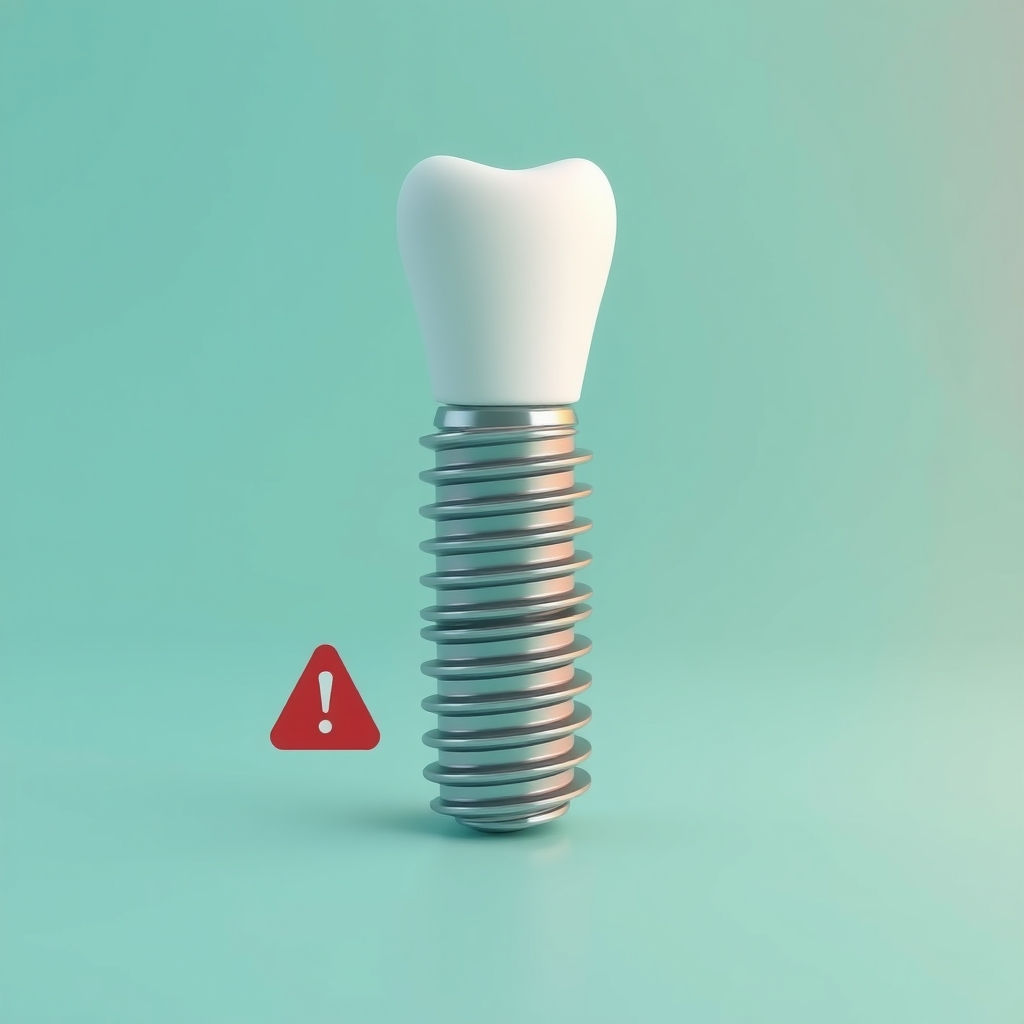
- Gum recession around the implant: If the metal post becomes visible or the gum line looks like it is pulling back, this may mean bone loss underneath.
- Bad taste or odor: A persistent unpleasant taste near the implant can be a sign of a low-grade infection.
Symptoms That Need Urgent Attention
Some symptoms should not wait for a routine checkup. Contact your dentist the same day if you notice:
- Sudden, sharp pain that was not there before
- The implant feels loose or has visibly shifted
- Swelling that is spreading to the cheek or jaw
- Fever along with pain or swelling at the implant site
- Pus or a foul taste that does not go away
These signs can indicate an active infection or a mechanical problem that needs quick evaluation to protect the surrounding bone and gum tissue.
Early Failure vs Late Failure
Implant problems are generally grouped by timing. Early failure usually happens within the first few months and is often related to how well the implant integrated with the bone, infection during healing, or smoking. Late failure happens after the implant has been functioning normally for a while, usually due to gum disease around the implant, grinding habits, or an ill-fitting crown putting uneven pressure on the post.
| Sign | Possible Cause | Urgency |
|---|---|---|
| Mild soreness, first week | Normal healing | Monitor |
| Persistent pain after healing | Infection or bite issue | See dentist soon |
| Looseness or movement | Bone integration failure | Urgent |
| Swelling with fever | Active infection | Urgent, same day |
| Gum recession, no pain | Slow bone loss | See dentist soon |
What Happens at the Dental Visit
When you come in with concerns about an implant, the dentist will usually check the stability of the implant, examine the gum tissue, and take an X-ray to look at the bone level around it. Depending on findings, treatment may involve a deep cleaning around the implant, antibiotics, a bite adjustment, or in more involved cases, minor surgery to clean the area. If the implant has lost too much bone support, removal and future replacement may be discussed, though this is not the first option considered.
Cost Considerations
Treatment cost depends on what is actually needed. A cleaning and checkup visit sits at a modest typical range, while addressing infection or bone loss around an implant can involve a wider typical range depending on complexity. Your dentist will explain findings and options clearly before any treatment is planned, so there are no surprises.
Protecting Your Implant Long Term
- Brush and floss around the implant daily, just as you would a natural tooth
- Avoid using the implant to open packages or bite very hard foods
- Keep up with regular dental checkups so small issues are caught early
- Mention teeth grinding or jaw clenching to your dentist, as it can stress the implant
- Do not ignore minor discomfort, since early signs are easier and more affordable to treat
If you have an implant and are noticing any of the symptoms described above, it is worth getting it checked rather than waiting. Patients in Sector 38, Gurugram can visit Rohini Dental Care for a prompt evaluation and a clear explanation of next steps.
Have questions about your teeth?
Rohini Dental Care · 209 P, Medicity, Islampur Colony, Sector 38, Gurugram
Frequently asked questions
Can a failing implant be saved?
Yes, if caught early. Cleaning the infected area, adjusting the bite, or treating gum disease around the implant can often stop the problem before the implant needs removal.
Is some discomfort normal after getting an implant?
Mild soreness and swelling for a few days after surgery is normal. Pain that returns weeks or months later, or that worsens over time, is not normal and should be checked.
How long do dental implants usually last?
With good oral hygiene and regular checkups, implants can last well over 15 to 20 years. Failure is uncommon but can happen due to infection, bite problems, or bone loss.
What happens if I ignore the warning signs?
Delaying care can lead to bone loss around the implant, making it harder to save or replace. Early evaluation gives you more treatment options and usually costs less to fix.
Treatment costs mentioned on this page are indicative ranges for the Sector 38, Gurugram region. Your exact cost depends on your case and will be confirmed after a clinical examination at the clinic.